
KRITIS-Dachgesetz 2026: Obligations for operators of critical infrastructures
What is the KRITIS-Dachgesetz and why does it exist?
The KRITIS-Dachgesetz (Law on Strengthening the Resilience of Critical Infrastructure) transposes the European CER Directive (Critical Entities Resilience) into German law.
Goal: Critical infrastructures should become more resilient to all types of threats—from sabotage and natural disasters to technical failures.
What makes it special: Unlike previous regulations (e.g., NIS2 for cybersecurity), the KRITIS umbrella law focuses on physical resilience —i.e., plant security, property security, structural measures, and crisis management.
The All-Gefahren-Ansatz means that operators must not only protect themselves against individual risks, but also think holistically—sabotage, fire, flooding, power failure, burglary.
The most important points
The KRITIS-Dachgesetz makes physical security a legal obligation
Important deadline: July 17, 2026 for registration with the BBK
After that: 9 months for risk assessment, 10 months for implementation of all measures
Operators must implement plant security, perimeter security, and resilience plans.
Failure to comply will result in heavy fines from 2027 onwards.
Am I affected by the KRITIS-Dachgesetz?
The law applies to facilities whose failure would affect at least 500,000 people. betreffen würde.
| Sector | Examples |
|---|---|
| Energy | Power plants, substations, gas pipelines, power grids |
| Water | Waterworks, sewage treatment plants, dams |
| Health | Large hospitals, blood banks, emergency dispatch centers |
| Traffic | Airports, train stations, ports, control centers |
| Telecommunications | Data centers, mobile communications hubs |
| Nutrition | Large warehouses, central distribution centers |
Important: Federal states can set lower thresholds. This means that regionally important municipal utilities, smaller hospitals, or local transport companies may also be affected.
Checklist: How to check whether you are affected
- Would a failure of our facility affect more than 500,000 people?
- Has our federal state defined lower thresholds?
- Have we been contacted by the Federal Office for Civil Protection (BBK)?
- Do we operate facilities in any of the sectors mentioned?
What specifically do I need to do?
1. Registration with the BBK
All affected operators must register their critical facilities with the Federal Office for Civil Protection and Disaster Assistance.
What you need to do:
Online registration via the BBK portal
Specification of location, sector, supply area
Appointment of a contact person
Deadline: July 17, 2026
2. Create a risk assessment
Based on the risk assessment, you must document:
What protective measures you take
How to respond in a crisis
How to restore operation
Who is responsible for what
Important: Not only do you have to draw up a plan, but you also have to implement all the protective measures described in it within 10 months of registration.
Practical tip: The plan must be tested. Conduct emergency drills at least once a year.
Deadline: 10 months after registration
3. Develop and implement a resilience plan
You must systematically analyze all threats to your facility.
Important: The deadline begins from the date of your registration. Anyone who registers on July 17, 2026, has until April 2027 to complete the risk assessment.
You must assess these risks:
Intentional threats:
Sabotage and terrorism
Burglary and theft
Vandalism
Internal perpetrators and espionage
Non-intentional threats:
Natural disasters (floods, storms, earthquakes)
Fire and explosion
Power outage
Technical failure
Human error
Deadline: 9 months after registration
4. Implement physical protective measures
The law requires state-of-the-art security. In practice, this means:
Perimeter security
- Sturdy fences (at least 2.5 m high)
- Controlled access gates with identification checks
- Lighting for all outdoor areas
- Visible signage
Access control systems
- Electronic locking systems with logging
- Chip cards or biometric procedures
- Dual control principle for highly sensitive areas
- Visitor management with registration
Video surveillance
- Complete camera coverage of critical areas
- Recording for at least 72 hours
- Intelligent alerts in case of anomalies
- GDPR-compliant data storage
Alarm systems
- Burglar alarm system in accordance with VdS standard
- Fire alarm system with automatic fire department alert
- Personal alarm for staff
- 24/7 connection to control center
Here's what's new: Human security presence becomes a legal requirement.
Minimum requirements for security personnel:
Proficiency examination pursuant to Section 34a of the Trade Regulation Act (GewO)
Plant security qualification for particularly critical facilities
Fire safety assistant training
First aid certification
Training on plant-specific risks
What plant security actually does:
Access controls with identity verification
Regular property inspections
Monitoring of security systems
Initial response to alarms
Evacuation in case of crisis
Complete documentation
5. Securing supply chains
You must ensure that critical supplies are not interrupted:
Contracts with guaranteed delivery times
Alternative suppliers as backup
Emergency stocks of critical spare parts (e.g., pumps, filters, control technology)
How do I meet the requirements in practice?
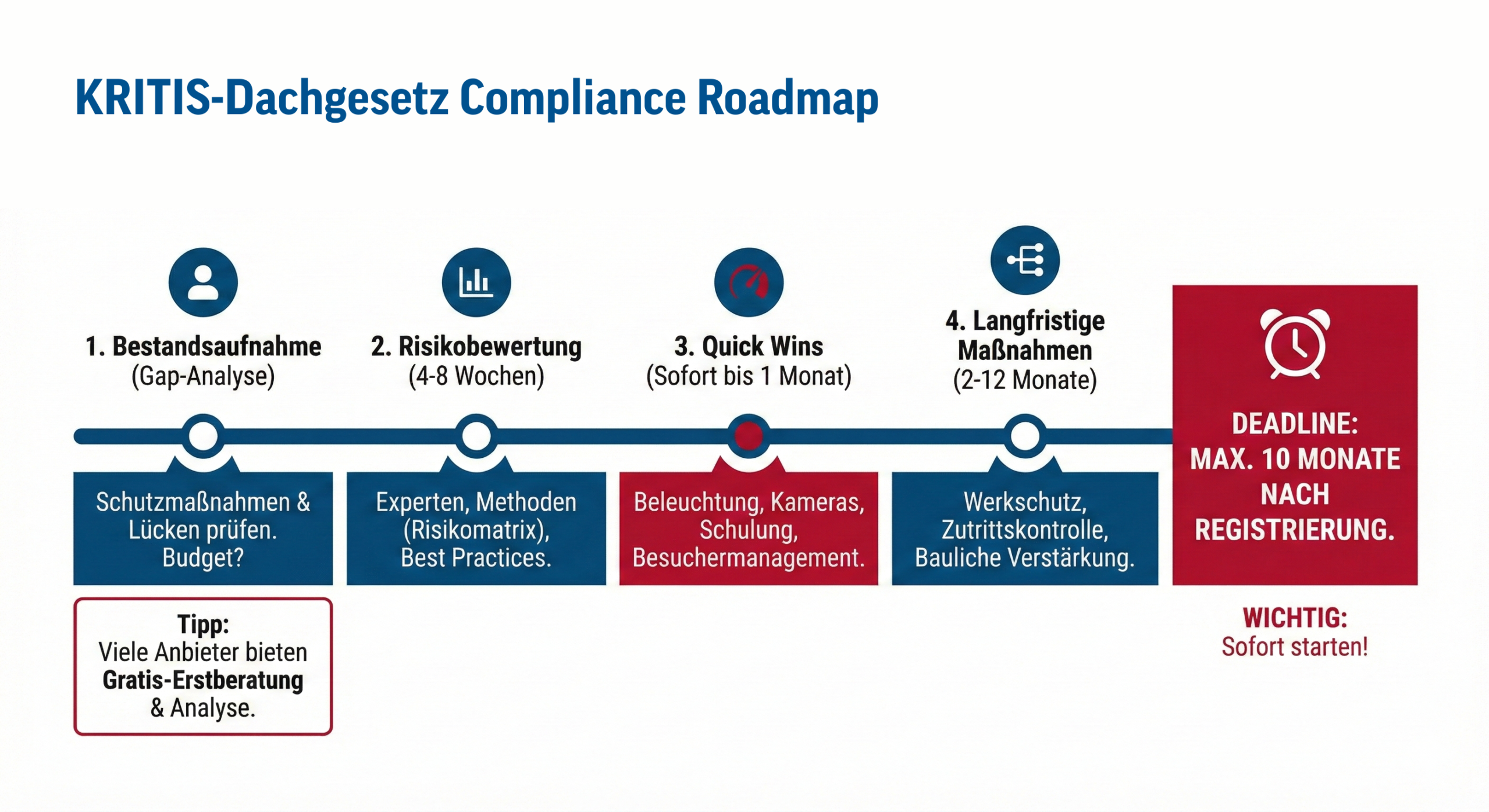
Step 1: Inventory (gap analysis)
Check honestly:
What protective measures do we already have in place?
Where are the biggest gaps?
What budget do we need?
Free tip: Many security service providers offer a free initial consultation and gap analysis.
Step 2: Conduct risk assessment with experts
Hire experienced security consultants who know your industry.
They bring:
Knowledge of current threat situations
Assessment methods (e.g., risk matrix)
Industry-specific best practices
Schedule: Allow 4-8 weeks for a professional risk assessment.
Step 3: Implement quick wins
Some measures can be implemented quickly:
Improvement of outdoor lighting (1-2 weeks)
Install additional cameras (2-4 weeks)
Training of existing personnel (immediately)
Implement visitor management system (1 month)
Step 4: Plan long-term measures
Others need more lead time:
Establishment of 24/7 plant security (2-3 months)
Electronic access control (3-4 months)
Structural reinforcement (6-12 months)
Important: You have a maximum of 10 months after registration. Therefore, start immediately after registration.
Step 5: Establish professional plant security
In-house security vs. security service provider?
| Criterion | In-house plant security | External service provider |
|---|---|---|
| Availability | Long recruitment period | Ready for immediate use |
| Expenses | High fixed costs | Flexible adaptation |
| Qualification | Personal responsibility | Certified personnel |
| Representation | Must be organized independently | Übernimmt Dienstleister |
| Compliance | Personal responsibility | Dokumentation inklusive |
Recommendation for KRITIS operators: External service providers such as Pond Security, which have experience with critical infrastructure, generally offer better value for money.
Step 6: Use B3S standards
Pond Insider Tip: Those who implement recognized industry-specific security standards (B3S) automatically meet the legal requirements.
Advantage: No double checks, standardized evidence, acceptance by authorities.
Check whether B3S standards exist for your industry (e.g., for energy suppliers, waterworks).
How Pond Security supports you with KRITIS compliance
As a security service provider for critical infrastructures, we focus on physical security::
Free initial consultation
- Impact assessment
- Gap analysis of your current security
- Individual recommendations for action
Risk assessment & safety concepts
- Professional risk analysis based on an all-risks approach
- Development of compliance-compliant resilience plans
- Support with communication with authorities
Certified plant security
- Competency examination pursuant to Section 34a of the Trade Regulation Act (GewO)
- Plant security qualifications
- Fire safety & first aid
- 24/7 availability
Customized security solutions
- Property protection and access control
- Mobile patrols
- Control center connection
- Crisis management
Compliance documentation
- Audit-ready reports
- Training certificates
- Incident documentation
Table of contents

- FAQ
Frequently asked questions about the KRITIS - Dachgesetz
NIS2 regulates cybersecurity (digital threats), while the KRITIS-Dachgesetz regulates physical security (sabotage, fire, burglary). Many companies fall under both laws.
Basically, you yourself through self-assessment. However, the BBK can also identify and contact operators.
You are violating applicable law and risk fines starting in 2027. Therefore, please register in a timely manner.
No, ISO 27001 only covers IT security. The KRITIS-Dachgesetz also requires physical security measures.
No, but you need qualified security personnel. Many operators rely on external service providers such as Pond Security due to cost and flexibility.


Your trusted security partner.
Leading companies and institutions rely on Pond Security. Our security solutions protect well-known organizations in industry, commerce and the public sector nationwide.
Your trusted security partner.
Leading companies and institutions rely on Pond Security. Our security solutions protect well-known organizations in industry, commerce and the public sector nationwide.


- Contact us
Strong together, safe together.
We are here for you! Feel free to contact us by phone, E-Mail or conveniently via our contact form.
Rückinger Strasse 12, 63526 Erlensee
Our headquarters
+ 49 (0) 61 83 / 806 – 0
Call us
[email protected]
Send us an E-Mail
Your direct contact to us
- Securely informed
Discover more updates from Pond Security.
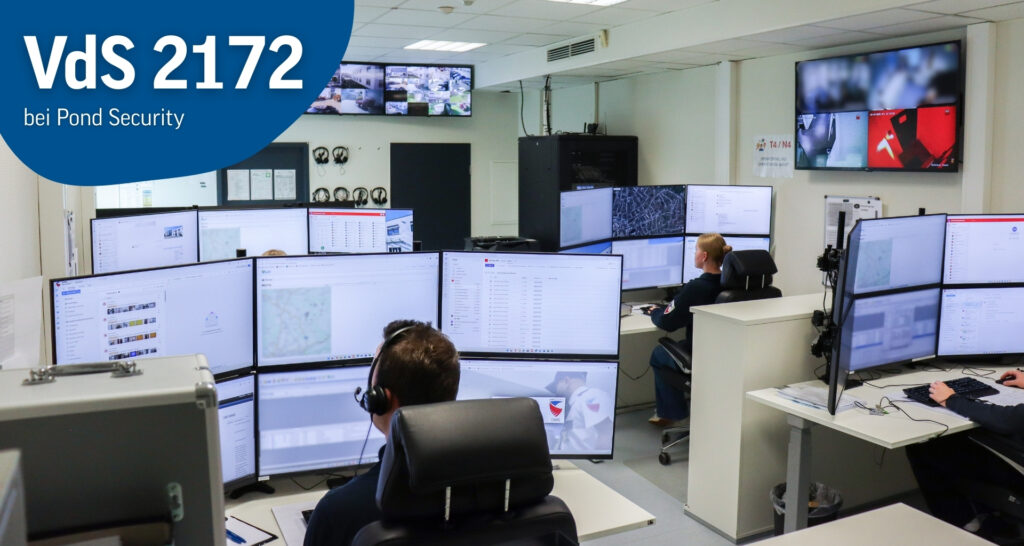
VdS 2172 at Pond Security: Certified security in the event of an alarm
When an alarm comes in at our alarm receiving center and emergency call and service control center (AES/NSL), every second counts. That's when it becomes clear whether processes, technology, and people really work together as well as promised.
ISO 27001:2022 at Pond Security
For us, information security is not a project, but part of our everyday routine. With ISO 27001:2022 certification, we demonstrate that our information security management system functions reliably, is regularly audited, and is continuously improved.
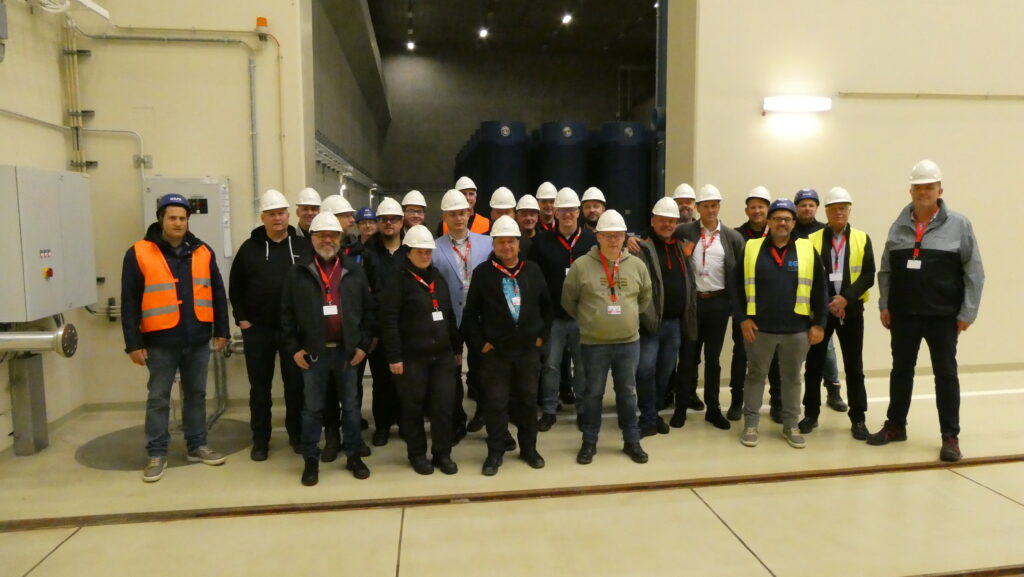
Network meeting “Masters of Protection and Safety” at BGZ Unterweser
On September 25 and 26, 2025, this year's “Masters of Protection and Safety” network meeting took place at a special location: the interim storage facility of BGZ Gesellschaft für Zwischenlagerung mbH at its site in